How Long Does Orthodontic Treatment Take in Vietnam?
Orthodontic treatment timeline guide in Vietnam. Mild crowding vs severe malocclusion, tray change schedules, accelerated orthodontics, and visit planning.
<!-- IMAGE SUGGESTION 1 (hero, right after title): Hero image: clear aligner trays fanned out beside a 3D dental model -->
By Đội ngũ DentalTreatmentVietnam · Medically reviewed by a licensed dental surgeon · Last updated: October 12, 2026
Crooked teeth are not just a cosmetic concern — they trap plaque, wear unevenly, and can strain your jaw for decades. The idea of fixing them as an adult feels daunting enough without a five-figure bill attached. In Vietnam, modern orthodontics costs 60–75% less than in the West, and clear aligner technology means much of the treatment can be monitored remotely. Here is how it works for international patients.
When patients consider straightening their teeth, the very first question they ask is almost always: "How long will it take?"
For international dental travelers planning trips to Southeast Asia, this question carries practical significance. Aligning teeth is a biological journey that involves remodeling living alveolar bone. Moving teeth too rapidly risks root resorption and tissue damage, while moving them too slowly leads to treatment fatigue.
Fortunately, modern digital orthodontics has eliminated much of the guesswork. Through 3D intraoral scanning, finite-element ClinCheck algorithms, and accelerated orthodontic devices, certified orthodontists in Vietnam can accurately map your treatment duration down to the exact week before you even begin.
This comprehensive guide breaks down orthodontic timelines across different case complexities, explains accelerated technology, and outlines vacation scheduling in Vietnam.

1. Timeline Estimates by Malocclusion Severity
The biological rate of tooth movement is approximately 1 millimeter per month. How long your treatment takes depends directly on how far your tooth roots must travel through alveolar bone:
ORTHODONTIC TREATMENT DURATION MATRIX
To compare costs across these different complexity tiers, explore: Invisalign Cost in Vietnam vs Australia/US.
| Case Complexity | Clinical Scope | Tray / Wire Count | Total Timeline |
|---|---|---|---|
| Minor Relapse / Spacing (Express) | Front 6 teeth minor rotations | 7 to 14 aligners (Single arch) | 3 to 6 Months |
| Mild-to-Moderate Malocclusion (Lite) | Moderate crowding, overjet, midline | 14 to 26 aligners (Both arches) | 6 to 12 Months |
| Moderate-to-Severe (Comprehensive) | Deep overbite, crossbite, premolars | 26 to 45 aligners or fixed braces | 12 to 18 Months |
| Complex Skeletal / Extraction Cases | Severe skeletal discrepancy; open bite, extractions | 45+ aligners or surgical fixed appliances | 18 to 24+ Months |
2. Accelerated Orthodontics: Cutting Timelines Safely
In traditional orthodontics, aligner trays were changed every 14 days to prevent root resorption. Today, leading orthodontic centers in Da Nang utilize evidence-based Accelerated Orthodontic Technologies that shorten treatment duration by 30% to 40%:

Technology A: High-Frequency Vibration (AcceleDent / VPro5)
- How It Works: Patients bite gently onto a soft silicone mouthpiece for just 5 minutes per day. The device emits high-frequency micro-pulses (30 Hz).
- The Cellular Benefit: Micro-vibrations stimulate osteoblast differentiation and increase local blood circulation around the periodontal ligament.
- The Result: Seats aligners tighter against teeth, relieves orthodontic soreness, and allows patients to switch trays safely every 5 to 7 days instead of every 14 days!
Technology B: Micro-Osteoperforation (Propel Orthodontics)
- How It Works: Performed chairside under local numbing in just 10 minutes. The periodontist uses a tiny micro-probe to create tiny pinhole perforations in the alveolar bone between roots.
- The Cellular Benefit: Triggers the Regional Acceleratory Phenomenon (RAP)—a temporary surge in cytokine release that softens cortical bone temporarily.
- The Result: Teeth glide through bone up to twice as fast during difficult rotation and root uprighting phases!
<!-- IMAGE SUGGESTION 2 (mid-article): Mid-article: orthodontist reviewing ClinCheck 3D simulation with patient -->
3. The International Patient Travel Schedule
Undergoing orthodontic care in Vietnam does not require living abroad. The modern protocol is designed for international lifestyles:
Phase 1: The Initial Vacation (7 to 10 Days in Da Nang)
- Day 1: iTero 5D digital scan, 3D photography, panoramic X-rays.
- Day 2 to 3: Orthodontist designs ClinCheck plan; digital patient approval.
- Day 4 to 5: Enjoy beachfront resort relaxation, Hoi An day trips, and local dining.
- Day 6: Aligners delivered from Align Technology lab; bond aesthetic composite attachments; initial tray fitted.
- Day 7: Hands-on training with the smartphone remote monitoring app; depart for home with your complete box of aligners!
Phase 2: Remote Treatment at Home (6 to 18 Months)
You wear your aligners 20 to 22 hours per day, changing to the next tray every 7 to 10 days. Once a week, you take a 60-second smartphone scan using your ScanBox device. Your Vietnamese orthodontist tracks your progress and gives digital approval to progress.
Phase 3: Final Completion Visit (3 to 5 Days - Optional)
Once your final tray is completed, you can return to Da Nang to have your attachments polished off, receive professional teeth whitening, and pick up your long-term Vivera retainers. (Alternatively, attachment removal and retainers can be handled by your local home dentist).
To read about remote tracking apps, see: Remote Monitoring for Orthodontic Patients After Returning Home.
4. Factors That Influence Your Personal Timeline
Your treatment duration is shaped by several biological and behavioral factors:
1. Daily Wear Compliance: Clear aligners only work when they are in your mouth. Wearing trays for only 16 hours instead of the required 22 hours slows progress and causes aligners to lose tracking.
2. Bone Density and Age: Younger adult bone remodels slightly faster than mature bone, though adult teeth can be aligned successfully at any age.
3. Biological Health of Gums: Teeth cannot be safely moved through actively inflamed bone. Any underlying gingivitis or periodontitis must be treated with deep scaling prior to orthodontic movement.
To learn about adult tooth movement, read: Adult Orthodontics in Vietnam: Is It Too Late? and check clinic directories on Da Nang Dental Hub.
Practical tip: If you are starting clear aligners, bring a small case and cleaning crystals in your day bag. You will be removing trays for meals constantly, and having the kit with you keeps the routine effortless.
<!-- IMAGE SUGGESTION 3 (before FAQ): Before FAQ: straight confident smile after orthodontic treatment -->
Frequently Asked Questions (FAQ)
What is the average duration of orthodontic treatment in Vietnam?
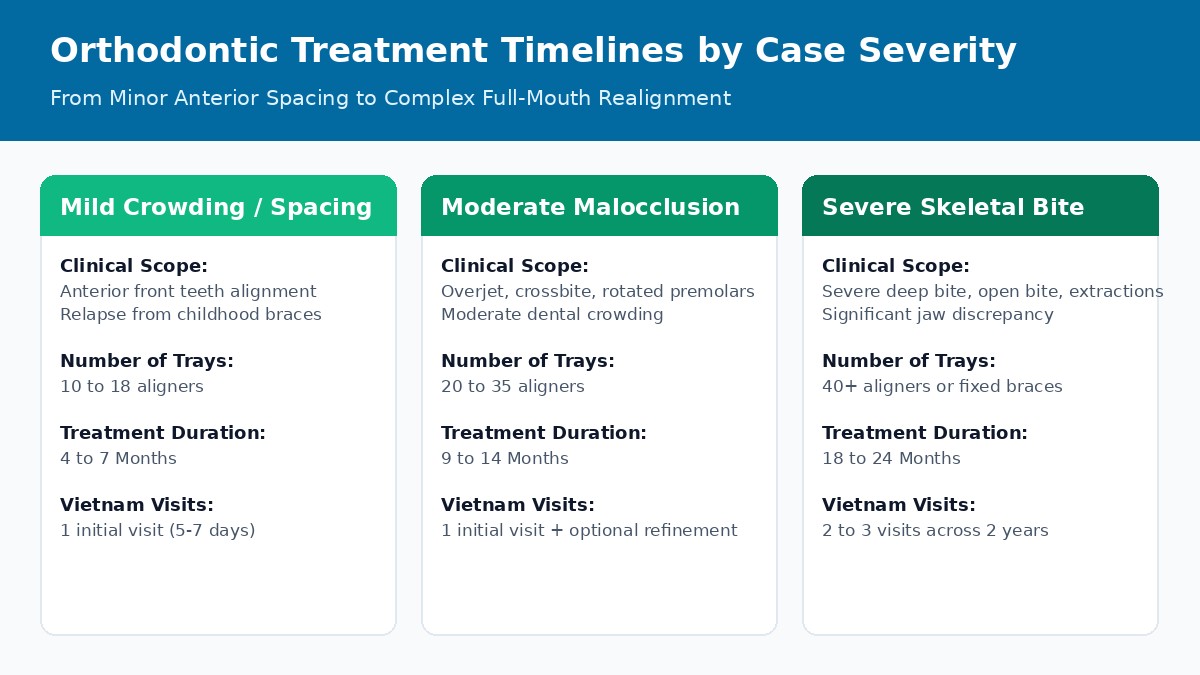
Orthodontic treatment duration ranges from 4 to 24 months depending on clinical severity. Mild anterior spacing or minor relapse from childhood braces typically takes 4 to 7 months (10 to 18 aligners). Moderate crowding, crossbites, and overjets take 9 to 14 months (20 to 35 aligners). Severe skeletal malocclusions or premolar extraction cases require 18 to 24 months.
Can orthodontic treatment be accelerated safely in Vietnamese clinics?
Yes. Leading orthodontic centers in Da Nang utilize micro-osteoperforation (Propel) and high-frequency vibration therapy (such as AcceleDent or VPro5). These non-invasive technologies stimulate cellular bone remodeling (osteoclast/osteoblast activity), allowing patients to safely switch clear aligner trays every 5 to 7 days instead of every 14 days, reducing overall treatment time by up to 30% to 40%.
How many times must I travel to Vietnam during clear aligner treatment?
Most international patients only need to make 1 or 2 trips to Vietnam. Trip 1 (7 to 10 days) covers 3D iTero scanning, ClinCheck simulation approval, SmartForce attachment bonding, and aligner delivery. The entire active treatment is then monitored remotely from home via smartphone tele-orthodontic apps. An optional Trip 2 (3 to 5 days) at the end of treatment removes attachments, performs final aesthetic teeth whitening, and delivers custom retainers.
What happens if teeth stop tracking according to the computer simulation?
If a stubborn tooth lags behind the digital plan (known as an aligner tracking issue), your remote monitoring app flags the discrepancy immediately. Your orthodontist can instruct you to wear chewies to seat the tray deeper, wear the current tray for a few extra days, or provide a complimentary mid-course digital refinement scan.
How long do I need to stay in Vietnam for my treatment?
It depends on the work: crowns and veneers often need 5–7 days, single implants 7–10 days per phase, and full-mouth restoration 10–14 days per visit. Your clinic will map appointments to your travel dates before you book flights.
How are braces adjustments handled if I live abroad?
If you get braces in Vietnam but live elsewhere, any licensed orthodontist at home can perform routine adjustments — bracket systems are standardized worldwide. Many patients instead choose clear aligners, which need fewer in-person visits.
Discover Your Exact Smile Timeline in Vietnam
Find out exactly how quickly you can achieve a straight, confident smile. In Vietnam, world-class orthodontists combine cutting-edge 3D simulations with accelerated treatment protocols and extraordinary cost savings.
---
This article is for informational purposes only and is not medical advice. Please consult a qualified dentist for diagnosis and treatment options.
What is the average duration of orthodontic treatment in Vietnam?
Orthodontic treatment duration ranges from 4 to 24 months depending on clinical severity. Mild anterior spacing or minor relapse from childhood braces typically takes 4 to 7 months (10 to 18 aligners). Moderate crowding, crossbites, and overjets take 9 to 14 months (20 to 35 aligners). Severe skeletal malocclusions or premolar extraction cases require 18 to 24 months.
Can orthodontic treatment be accelerated safely in Vietnamese clinics?
Yes. Leading orthodontic centers in Da Nang utilize micro-osteoperforation (Propel) and high-frequency vibration therapy (such as AcceleDent or VPro5). These non-invasive technologies stimulate cellular bone remodeling (osteoclast/osteoblast activity), allowing patients to safely switch clear aligner trays every 5 to 7 days instead of every 14 days, reducing overall treatment time by up to 30% to 40%.
How many times must I travel to Vietnam during clear aligner treatment?
Most international patients only need to make 1 or 2 trips to Vietnam. Trip 1 (7 to 10 days) covers 3D iTero scanning, ClinCheck simulation approval, SmartForce attachment bonding, and aligner delivery. The entire active treatment is then monitored remotely from home via smartphone tele-orthodontic apps. An optional Trip 2 (3 to 5 days) at the end of treatment removes attachments, performs final aesthetic teeth whitening, and delivers custom retainers.
What happens if teeth stop tracking according to the computer simulation?
If a stubborn tooth lags behind the digital plan (known as an aligner tracking issue), your remote monitoring app flags the discrepancy immediately. Your orthodontist can instruct you to wear chewies to seat the tray deeper, wear the current tray for a few extra days, or provide a complimentary mid-course digital refinement scan.
How long do I need to stay in Vietnam for my treatment?
It depends on the work: crowns and veneers often need 5–7 days, single implants 7–10 days per phase, and full-mouth restoration 10–14 days per visit. Your clinic will map appointments to your travel dates before you book flights.
How are braces adjustments handled if I live abroad?
If you get braces in Vietnam but live elsewhere, any licensed orthodontist at home can perform routine adjustments — bracket systems are standardized worldwide. Many patients instead choose clear aligners, which need fewer in-person visits.
Dental Tourism Vietnam Cost: Complete Price Guide & Financial Planning 2026
Save 70-80% on dental care in Vietnam. Complete 2025 cost guide, procedure comparison vs Australia/US/UK, payment methods, hidden fees & net ROI calculator.
Complete Cost Breakdown: Flight + Hotel + Treatment in Vietnam
Full out-of-pocket cost breakdown for dental tourism in Vietnam. Return flights, 4-star hotels, dental procedures, meals, and real patient budget models.
Dental Tourism Cost Calculator: How to Estimate Your Trip
Calculate your dental tourism savings in Vietnam. 4-step formula: clinic procedures + flights + resort stays + living expenses vs Western costs.
Independent Pre-Trip Resources for International Patients
To ensure your dental travel journey is seamless and well-prepared, we recommend consulting these independent destination and recovery travel guides:
"Read the medical travel & e-Visa preparation guide at VietnamMedicalTravelGuide.com"
• Post-op soft food dining & culinary recovery in Vietnam
"Find 5-star beachfront resorts near dental centers at DaNangDentalHub.com"
• Top 5-star beachfront resorts with clinic concierge shuttles