Is General Dental Treatment in Vietnam Safe for Tourists?
Examine dental safety, sterilization standards, and doctor qualifications in Vietnam. Class-B autoclaves, infection control, and international patient reviews.
<!-- IMAGE SUGGESTION 1 (hero, right after title): Hero image: modern implant surgery suite in Da Nang with digital equipment -->
By Đội ngũ DentalTreatmentVietnam · Medically reviewed by a licensed dental surgeon · Last updated: October 12, 2026
Choosing where to have dental work abroad is a big decision, and it deserves more than a price comparison. Vietnam — and Da Nang in particular — has earned its reputation through modern clinics, transparent pricing, and a recovery setting that does not feel like a hospital corridor. Here is an honest look at why so many international patients end up here.
For anyone considering traveling overseas for medical or dental care, safety is paramount. While the prospect of saving 70% to 80% on root canals, dental crowns, fillings, and extractions is undeniably appealing, natural skepticism often arises:
Is the sterilization truly up to Western standards? Are the dental materials authentic or cheap imitations? What qualifications do Vietnamese dentists hold? And what happens if complications occur after I return home?
These are essential, responsible questions that every medical traveler must ask.
The objective answer is reassuring: Dental treatment at accredited international clinics in Vietnam is exceptionally safe, rigorously regulated, and clinically comparable to premier clinics in Sydney, London, or Los Angeles.
In this investigative guide to general dentistry in Vietnam, we examine the infection control protocols, doctor qualifications, material authentication, and legal patient protections that make Vietnam one of the world's most trusted dental tourism destinations.

1. Infection Control & European Class-B Sterilization
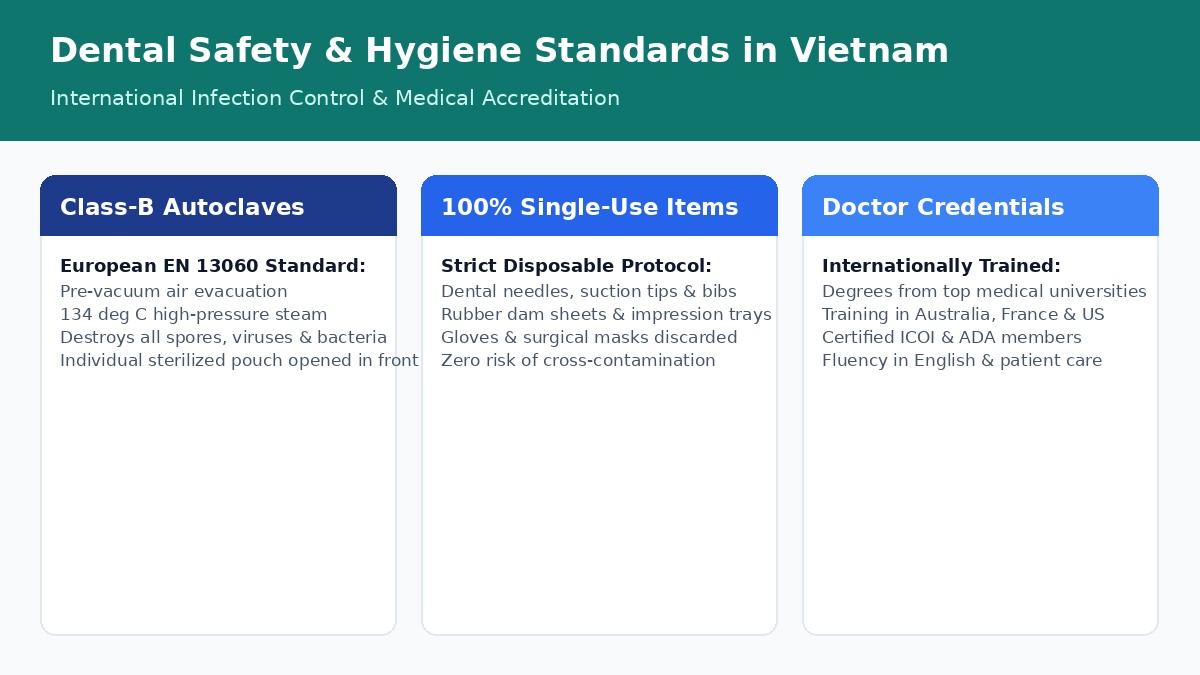
In any healthcare setting, patient safety begins with sterilization. In premier Vietnamese dental hospitals, infection control protocols follow strict CDC (US Centers for Disease Control and Prevention) and European EN 13060 guidelines.
THE 5-STEP CLINICAL STERILIZATION PROTOCOL
| STEP 1: Enzymatic Ultrasonic Bath | Decontaminates and breaks down organic bio-debris in high-frequency sonic fluid. |
|---|---|
| STEP 2: Thermal Disinfection | Washes instruments at 93°C to achieve bactericidal and virucidal disinfection. |
| STEP 3: Hermetic Pouch Sealing | Individually sealed in medical-grade pouches with internal chemical indicators. |
| STEP 4: Class-B Vacuum Autoclave | 3-fraction pre-vacuum cycles at 134°C and 2.1 bar pressure destroy all spores. |
| STEP 5: Chairside Unsealing | Pouch is unsealed in front of the patient right before treatment begins. |
Strict Single-Use Disposable Policy
To eliminate any potential cross-contamination, all items that come into contact with saliva or blood that cannot be heat-sterilized are 100% single-use and discarded:
- Anesthetic needles and carpules.
- Saliva ejector and high-volume suction tips.
- Patient bibs, plastic barriers, and headrest covers.
- Nitrile surgical gloves and medical masks.
- Micro-applicators and composite polishing discs.
2. Doctor Qualifications & International Training
A medical facility is only as exceptional as the hands delivering the care. The dental profession in Vietnam is highly competitive and prestigious:
- Formal Academic Education: Dentists must complete a rigorous 6-year Doctor of Dental Surgery (DDS) degree from premier national medical institutions such as the University of Medicine and Pharmacy at Ho Chi Minh City or Hanoi Medical University.
- International Post-Graduate Training: Lead clinicians at international hubs regularly spend years training abroad, completing post-graduate master’s programs and clinical residencies in Australia (University of Sydney, Melbourne), the United States (Loma Linda, NYU), France, and Germany.
- Global Professional Memberships: Specialists maintain active memberships in prestigious global organizations, including the International Congress of Oral Implantologists (ICOI), the American Dental Association (ADA), and the International Team for Implantology (ITI).
To review doctor credentials and hospital facilities in Central Vietnam, explore: Da Nang Dental Hub.

<!-- IMAGE SUGGESTION 2 (mid-article): Mid-article: close-up of 3D CBCT scan being reviewed by implant surgeon -->
3. Authentic Dental Biomaterials: Zero Counterfeits
A frequent concern among dental travelers is the authenticity of dental materials. Accredited clinics in Vietnam exclusively procure genuine, FDA- and CE-approved consumables from authorized national distributors:
Patients are given the original authenticity cards and serial number stickers for all crowns and implants.
| Dental Specialty | Brand / Material | Origin | Global Standard |
|---|---|---|---|
| Composite Fillings | 3M Filtek Supreme Tokuyama Estelite | USA Japan | Nanohybrid gold standard |
| Root Canal Endodontic Files & Sealers | ProTaper Gold NiTi Bio-C Sealer | Dentsply Sirona Switzerland / US | Flexible rotary Bioceramic flow |
| CAD/CAM Ceramic Inlays & Crowns | IPS e.max Katana Zirconia | Ivoclar Vivadent Kuraray (Japan) | High flexural monolithic block |
| Dental Implants | Straumann / Nobel Dentium / Osstem | Switzerland / USA South Korea / USA | Lifetime global manufacturer card |
To understand implant hardware protections, read: Dental Implant Warranty and Guarantee Policies in Vietnam.
4. The Patient Safety Checklist: How to Choose a Clinic
Before booking your dental trip to Vietnam, verify that your chosen clinic satisfies these 5 fundamental safety criteria:
1. Official Government Licensing: Ensure the clinic holds a current, verifiable operating license issued by the Vietnamese Ministry of Health (Sở Y Tế).
2. Transparent Written Quotes: Request an itemized treatment proposal in writing before traveling. Reputable clinics guarantee zero hidden chairside surcharges.
3. Advanced Diagnostic Suite: Confirm that the facility houses on-site 3D CBCT radiography and digital intraoral optical scanners.
4. Dedicated International Department: Verify that the clinic has full-time English-speaking coordinators who handle communication, scheduling, and aftercare documentation.
5. Clear Written Warranties: Ensure your restorative crowns, fillings, or implants are backed by written guarantee policies.
For comprehensive safety and financial planning, read: Dental Tourism Vietnam Cost: Complete Price Guide & Financial Planning 2025 and view our curated vacation packages in All-Inclusive Dental Treatment Packages in Vietnam.
Practical tip: Save your clinic coordinator's messaging number in your phone before you fly. When a question pops up at 10pm — about swelling, medication timing, or tomorrow's pickup — you will get an answer in minutes, not the next morning.
<!-- IMAGE SUGGESTION 3 (before FAQ): Before FAQ: confident patient smiling after full-mouth implant restoration -->
Frequently Asked Questions (FAQ)
Is general dental treatment in Vietnam as safe as in Australia or the US?
Yes, when choosing an accredited international dental hospital or premier clinic. Leading centers in Da Nang, Ho Chi Minh City, and Hanoi comply strictly with international health regulations, CDC infection control guidelines, and ISO 9001/CE certifications. They utilize European Class-B vacuum autoclaves, 100% disposable single-use items, low-radiation digital imaging, and imported European/US dental materials.
What sterilization protocols do certified clinics in Vietnam follow?
Accredited clinics use an impenetrable 5-step infection control loop: (1) Pre-soak ultrasonic enzymatic bath, (2) Manual scrub and thermal disinfection, (3) Vacuum pouch sealing with color-changing chemical indicators, (4) Fractionated vacuum Class-B autoclaving at 134°C under high pressure, and (5) Opening sealed sterile pouches directly in front of the patient at the start of treatment.
Are Vietnamese dentists qualified to treat international patients?
Yes. Lead dental surgeons and endodontists graduate from Vietnam's top medical universities (such as Hanoi Medical University and Ho Chi Minh City University of Medicine and Pharmacy) and regularly complete post-graduate fellowships in Australia, the United States, France, South Korea, and Switzerland. Many hold active memberships in the International Congress of Oral Implantologists (ICOI) and the American Dental Association (ADA).
What should I look for to verify a clinic is safe before booking?
Look for: (1) Transparent Ministry of Health operating licenses displayed publicly, (2) English-fluent clinical staff who explain X-rays clearly, (3) Use of sealed sterile instrument packs, (4) Modern digital diagnostic suites (3D CBCT, intraoral optical scanners), (5) Verified third-party patient reviews on Google, and (6) Written warranty and fee transparency before treatment begins.
How do I get a treatment plan and quote before traveling?
Send your X-rays and photos through the clinic's website or messaging app for a free remote consultation. You should receive a written plan with itemized prices within a few days — never travel on a verbal estimate alone.
Is there an age limit for dental implants or major work abroad?
There is no strict age limit — what matters is your general health and bone condition. Patients in their 70s and 80s routinely get implants in Vietnam after a medical review; disclose all medications and conditions during the remote consultation.
Experience World-Class, Safe Dentistry in Vietnam
You do not have to compromise on safety to enjoy exceptional savings. In Vietnam, international sterilization standards, world-renowned materials, and compassionate, expert dentists ensure a safe, radiant smile transformation.
---
This article is for informational purposes only and is not medical advice. Please consult a qualified dentist for diagnosis and treatment options.
Is general dental treatment in Vietnam as safe as in Australia or the US?
Yes, when choosing an accredited international dental hospital or premier clinic. Leading centers in Da Nang, Ho Chi Minh City, and Hanoi comply strictly with international health regulations, CDC infection control guidelines, and ISO 9001/CE certifications. They utilize European Class-B vacuum autoclaves, 100% disposable single-use items, low-radiation digital imaging, and imported European/US dental materials.
What sterilization protocols do certified clinics in Vietnam follow?
Accredited clinics use an impenetrable 5-step infection control loop: (1) Pre-soak ultrasonic enzymatic bath, (2) Manual scrub and thermal disinfection, (3) Vacuum pouch sealing with color-changing chemical indicators, (4) Fractionated vacuum Class-B autoclaving at 134°C under high pressure, and (5) Opening sealed sterile pouches directly in front of the patient at the start of treatment.
Are Vietnamese dentists qualified to treat international patients?
Yes. Lead dental surgeons and endodontists graduate from Vietnam's top medical universities (such as Hanoi Medical University and Ho Chi Minh City University of Medicine and Pharmacy) and regularly complete post-graduate fellowships in Australia, the United States, France, South Korea, and Switzerland. Many hold active memberships in the International Congress of Oral Implantologists (ICOI) and the American Dental Association (ADA).
What should I look for to verify a clinic is safe before booking?
Look for: (1) Transparent Ministry of Health operating licenses displayed publicly, (2) English-fluent clinical staff who explain X-rays clearly, (3) Use of sealed sterile instrument packs, (4) Modern digital diagnostic suites (3D CBCT, intraoral optical scanners), (5) Verified third-party patient reviews on Google, and (6) Written warranty and fee transparency before treatment begins.
How do I get a treatment plan and quote before traveling?
Send your X-rays and photos through the clinic's website or messaging app for a free remote consultation. You should receive a written plan with itemized prices within a few days — never travel on a verbal estimate alone.
Is there an age limit for dental implants or major work abroad?
There is no strict age limit — what matters is your general health and bone condition. Patients in their 70s and 80s routinely get implants in Vietnam after a medical review; disclose all medications and conditions during the remote consultation.
Dental Tourism Vietnam Cost: Complete Price Guide & Financial Planning 2026
Save 70-80% on dental care in Vietnam. Complete 2025 cost guide, procedure comparison vs Australia/US/UK, payment methods, hidden fees & net ROI calculator.
Complete Cost Breakdown: Flight + Hotel + Treatment in Vietnam
Full out-of-pocket cost breakdown for dental tourism in Vietnam. Return flights, 4-star hotels, dental procedures, meals, and real patient budget models.
Dental Tourism Cost Calculator: How to Estimate Your Trip
Calculate your dental tourism savings in Vietnam. 4-step formula: clinic procedures + flights + resort stays + living expenses vs Western costs.
Independent Pre-Trip Resources for International Patients
To ensure your dental travel journey is seamless and well-prepared, we recommend consulting these independent destination and recovery travel guides:
"View the comprehensive pre-trip medical checklist at VietnamMedicalTravelGuide.com"
• Post-op soft food dining & culinary recovery in Vietnam
"View airport transit times and clinic neighborhood maps at DaNangDentalHub.com"
• Top 5-star beachfront resorts with clinic concierge shuttles