Maintaining Gum Health After Treatment in Vietnam
Long-term periodontal maintenance guide after dental tourism in Vietnam. Daily home care, electric toothbrushes, 3-month cleans, and tele-dentistry support.
<!-- IMAGE SUGGESTION 1 (hero, right after title): Hero image: modern treatment room prepared for a dental procedure -->
By Đội ngũ DentalTreatmentVietnam · Medically reviewed by a licensed dental surgeon · Last updated: October 12, 2026
Nobody books a holiday around a root canal — but when the toothache bill at home runs into the thousands, a trip to Vietnam starts making a lot of sense. General and surgical dentistry here follows the same protocols and uses the same equipment you would find in any Western practice. What follows is a practical walkthrough: what to expect in the chair, how recovery fits into a trip, and how to choose the right clinic.
Completing a successful course of periodontal therapy in Vietnam—whether through ultrasonic scaling and root planing, LANAP laser pocket decontamination, or regenerative grafting—is a monumental victory for your oral health. Your gums are firm and pink once more, bleeding has ceased, chronic bad breath is gone, and loose teeth have stabilized.
However, clinical treatment at the dental clinic represents only half of the journey. Periodontitis is a chronic condition, much like hypertension or diabetes. While modern dentistry can successfully arrest the infection and regenerate lost tissue, maintaining long-term gum health requires lifelong partnership between your daily home care and professional supportive hygiene.
In this practical aftercare guide to periodontal treatment in Vietnam, we outline the daily hygiene tools, clinical maintenance schedules, and remote tele-dentistry support needed to keep your smile healthy and vibrant for the rest of your life.

1. The 90-Day Bacterial Cycle: Why 3-Month Maintenance Is Essential
A common question among dental patients is: Why can't I just get a dental clean once a year like everyone else?
The answer lies in the microbiological life cycle of subgingival bacteria:
THE 90-DAY PERIODONTAL BACTERIAL CYCLE
Visiting a dental hygienist every 3 to 4 months resets this bacterial clock, ensuring that harmful colonies never reach the threshold required to destroy bone.
| DAY 1 (Clinic) | Deep scaling & laser therapy eradicate 99.9% of bacteria Pockets are clean, sterile, and healing. |
|---|---|
| DAYS 30 – 60 | Harmless early colonizer bacteria repopulate pockets. Gums remain firm and healthy with good brushing. |
| DAYS 90 – 120 | Complex, destructive anaerobic pathogens (P. gingivalis, T. forsythia) reach critical colony mass. Bone resorption restarts IF subgingival biofilm is not professionally disrupted! |
To learn about root planing, read: Scaling and Root Planing in Vietnam: What to Expect.
2. The Daily Home Hygiene Tool Kit
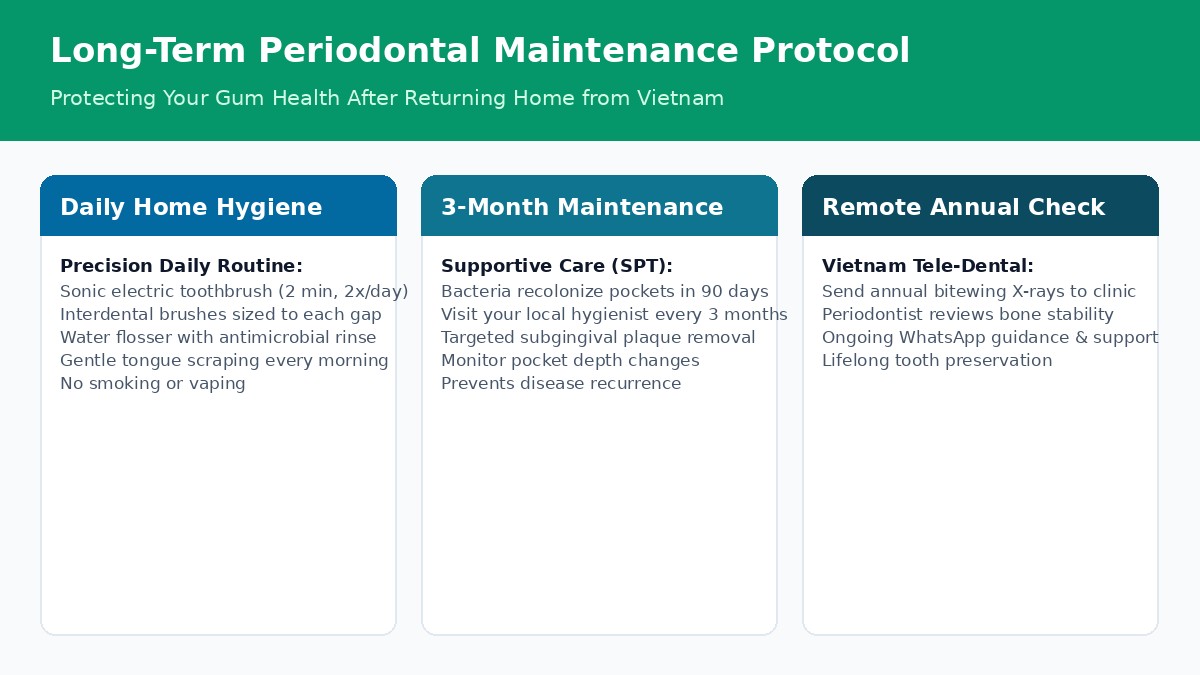
Standard brushing with a manual toothbrush cleans only 60% of tooth surfaces. To protect receded gum margins and tight interdental spaces, you need specialized tools:
- Sonic Electric Toothbrush (e.g., Philips Sonicare / Oral-B iO): Sonic micro-vibrations drive fluid deep into interdental gaps, dislodging plaque without aggressive scrubbing that causes further gum recession.
- Calibrated Interdental Brushes (e.g., Curaprox / TePe): When gums have receded, standard dental floss passes loosely through gaps without scraping the root walls. Interdental brushes sized to fit each specific embrasure space remove 95% more plaque than floss alone.
- Water Flossers (Oral Irrigators): A pulsating stream of warm water flushes subgingival pockets up to 6mm deep, washing away food debris and diluting bacterial toxins.
- Therapeutic Mouthwashes: Short courses of chlorhexidine 0.12% during flare-ups, transitioned to daily essential-oil or cetylpyridinium chloride (CPC) rinses.
3. Lifestyle Habits for Lifelong Gum Health
Periodontal health is intimately connected to systemic lifestyle factors:
To review the warning signs of recurrence, see: Signs You Need Periodontal Treatment Before Your Trip.
| Positive Lifestyle Factor | Damaging Habit to Avoid |
|---|---|
| • Nutrient-dense diet rich in Vitamin C, D & Omega-3 fats • Adequate daily hydration (water) • Stress reduction (Lower cortisol) • Controlled blood sugar (HbA1c <7) | • Tobacco smoking or vaping (Restricts capillary blood flow by 70%!) • Untreated nocturnal teeth grinding (Requires a custom nightguard) • High-sugar, sticky processed snacking |

<!-- IMAGE SUGGESTION 2 (mid-article): Mid-article: dentist working with digital X-ray guidance -->
4. Lifelong Tele-Dental Partnership with Your Vietnam Clinic
Your relationship with your Vietnamese dental team does not end when your flight departs Da Nang International Airport:
1. Digital Periodontal Passport: You receive high-resolution digital copies of your 6-point periodontal chart, 3D CBCT scans, and surgical discharge summary.
2. Seamless Handover to Home Clinicians: Share these documents with your local dentist or hygienist in Australia, the US, or the UK to coordinate your 3-month maintenance schedule.
3. Annual Tele-Checkups: Once a year, email updated bitewing X-rays to your Vietnamese clinic. Your lead periodontist reviews your bone levels and provides ongoing medical feedback via WhatsApp.
To check overall procedural pricing, review: Gum Disease Treatment Cost in Vietnam and Dental Tourism Vietnam Cost: Complete Price Guide 2025.
Practical tip: Take a photo of your smile on day one of recovery and then weekly. Healing is gradual enough that you will not notice progress day to day — the photos prove it is happening.
<!-- IMAGE SUGGESTION 3 (before FAQ): Before FAQ: relieved patient after a smooth treatment session -->
Frequently Asked Questions (FAQ)
Why is periodontal maintenance different from a routine dental clean?
Routine dental cleaning is a preventive procedure for individuals with healthy gums to remove supragingival plaque and tartar. Periodontal maintenance (supportive periodontal therapy) is an ongoing medical treatment for patients diagnosed with periodontitis. Because periodontal bacteria repopulate deep pockets every 90 to 120 days, maintenance cleanings focus on disrupting subgingival biofilm and monitoring pocket depths every 3 to 4 months to prevent disease recurrence.
What daily oral hygiene routine is required to maintain gum health at home?
An effective daily periodontal protocol includes: (1) Brushing twice daily for 2 minutes with an oscillating sonic electric toothbrush angled at 45 degrees along the gumline, (2) Daily interdental cleaning with appropriately sized interdental brushes (floss is insufficient for receded gums), (3) Using an oral irrigator (water flosser) to flush subgingival sulci, and (4) Daily tongue scraping.
What should I do if my gums start bleeding again after returning home?
Bleeding indicates that bacterial plaque has re-established an active colony. Contact your Vietnamese clinic's international patient coordinator via WhatsApp with clear photos. Your periodontist will review your records, recommend a therapeutic antiseptic rinse regimen, and advise scheduling a maintenance clean with your local dental hygienist.
How does remote tele-dental monitoring work after treatment in Vietnam?
Accredited dental centers in Da Nang establish an ongoing digital health partnership. You receive full copies of your periodontal charting, 3D CBCT scans, and treatment notes. Once a year, you email updated bitewing X-rays from your local checkup, allowing your Vietnamese periodontist to monitor bone stability over your lifetime.
How do I get a treatment plan and quote before traveling?
Send your X-rays and photos through the clinic's website or messaging app for a free remote consultation. You should receive a written plan with itemized prices within a few days — never travel on a verbal estimate alone.
What does aftercare look like once I am back home?
You will leave with written aftercare instructions, prescribed medication, and your full treatment records. Mild swelling for 2–3 days is normal after surgery. Your clinic stays reachable by message or video call, and your local dentist can handle routine check-ups.
5. Choosing the Right Oral Hygiene Tools: Product Recommendations
Investing in professional-grade home hygiene tools ensures that your clinical results endure for decades:
- Curaprox CPS Prime Interdental Brushes: Crafted with ultra-fine surgical Cural® wire that fills the entire interdental space without bending or damaging root surfaces.
- Waterpik Cordless Advanced Water Flosser: Features specialized Pik Pocket™ Tips with soft rubber nozzles designed to deliver low-pressure antimicrobial rinses 6mm below the gumline.
- Chlorhexidine Gluconate 0.12% vs CPC Rinses: Use therapeutic chlorhexidine for only 10 to 14 days during active healing to avoid temporary brownish tooth staining; transition to daily cetylpyridinium chloride (CPC) or essential oil (Listerine Zero Alcohol) rinses for long-term daily plaque inhibition.
6. The Psychological & Quality of Life Benefits of Gum Health
Chronic gum disease takes a heavy toll on personal emotional well-being. Patients frequently report feeling self-conscious about chronic bad breath, anxious about bleeding when eating in public, or depressed by loose, mobile teeth.
Restoring your periodontal health in Vietnam yields transformative psychological rewards:
- Restored Social Confidence: No more worrying about bad breath or blood on food napkins.
- Eating Freedom: Chew fresh crunchy apples, tender meats, and healthy crisp salads with total stability and zero discomfort.
- Lifelong Natural Teeth Retention: Safeguarding your natural teeth eliminates the fear of premature tooth loss and avoids tens of thousands of dollars in emergency dental procedures down the road.
Safeguard Your Smile with Lifetime Care
Enjoy the lasting rewards of healthy, pink, and firm gums. Combine world-class periodontal therapy in Da Nang with disciplined home care and remote specialist support.
---
This article is for informational purposes only and is not medical advice. Please consult a qualified dentist for diagnosis and treatment options.
Why is periodontal maintenance different from a routine dental clean?
Routine dental cleaning is a preventive procedure for individuals with healthy gums to remove supragingival plaque and tartar. Periodontal maintenance (supportive periodontal therapy) is an ongoing medical treatment for patients diagnosed with periodontitis. Because periodontal bacteria repopulate deep pockets every 90 to 120 days, maintenance cleanings focus on disrupting subgingival biofilm and monitoring pocket depths every 3 to 4 months to prevent disease recurrence.
What daily oral hygiene routine is required to maintain gum health at home?
An effective daily periodontal protocol includes: (1) Brushing twice daily for 2 minutes with an oscillating sonic electric toothbrush angled at 45 degrees along the gumline, (2) Daily interdental cleaning with appropriately sized interdental brushes (floss is insufficient for receded gums), (3) Using an oral irrigator (water flosser) to flush subgingival sulci, and (4) Daily tongue scraping.
What should I do if my gums start bleeding again after returning home?
Bleeding indicates that bacterial plaque has re-established an active colony. Contact your Vietnamese clinic's international patient coordinator via WhatsApp with clear photos. Your periodontist will review your records, recommend a therapeutic antiseptic rinse regimen, and advise scheduling a maintenance clean with your local dental hygienist.
How does remote tele-dental monitoring work after treatment in Vietnam?
Accredited dental centers in Da Nang establish an ongoing digital health partnership. You receive full copies of your periodontal charting, 3D CBCT scans, and treatment notes. Once a year, you email updated bitewing X-rays from your local checkup, allowing your Vietnamese periodontist to monitor bone stability over your lifetime.
How do I get a treatment plan and quote before traveling?
Send your X-rays and photos through the clinic's website or messaging app for a free remote consultation. You should receive a written plan with itemized prices within a few days — never travel on a verbal estimate alone.
What does aftercare look like once I am back home?
You will leave with written aftercare instructions, prescribed medication, and your full treatment records. Mild swelling for 2–3 days is normal after surgery. Your clinic stays reachable by message or video call, and your local dentist can handle routine check-ups.
Dental Tourism Vietnam Cost: Complete Price Guide & Financial Planning 2026
Save 70-80% on dental care in Vietnam. Complete 2025 cost guide, procedure comparison vs Australia/US/UK, payment methods, hidden fees & net ROI calculator.
Complete Cost Breakdown: Flight + Hotel + Treatment in Vietnam
Full out-of-pocket cost breakdown for dental tourism in Vietnam. Return flights, 4-star hotels, dental procedures, meals, and real patient budget models.
Dental Tourism Cost Calculator: How to Estimate Your Trip
Calculate your dental tourism savings in Vietnam. 4-step formula: clinic procedures + flights + resort stays + living expenses vs Western costs.
Independent Pre-Trip Resources for International Patients
To ensure your dental travel journey is seamless and well-prepared, we recommend consulting these independent destination and recovery travel guides:
"View the comprehensive pre-trip medical checklist at VietnamMedicalTravelGuide.com"
• Post-op soft food dining & culinary recovery in Vietnam
"View airport transit times and clinic neighborhood maps at DaNangDentalHub.com"
• Top 5-star beachfront resorts with clinic concierge shuttles