Root Canal Recovery Timeline: What to Expect
Day-by-day root canal recovery guide. Normal sensations vs warning signs, pain management, permanent crowns, and traveling home safely from Vietnam.
<!-- IMAGE SUGGESTION 1 (hero, right after title): Hero image: peaceful beachfront recovery setting in Da Nang -->
By Đội ngũ DentalTreatmentVietnam · Medically reviewed by a licensed dental surgeon · Last updated: October 12, 2026
The procedure itself is only half the story — how you recover determines how good your result looks and feels a year from now. The reassuring part: recovering in Da Nang, with sea air and unhurried days, beats healing on your couch at home. This guide covers the practical side of recovery: timelines, food, what is normal, and the warning signs that mean you should call your dentist.
For decades, popular culture has unfairly caricatured root canals as the ultimate symbol of medical misery. In truth, modern endodontic therapy does not cause pain—it cures it. By removing the necrotic, inflamed nerve tissue from inside a tooth's root canals, the procedure immediately relieves the agony of acute pulpitis.
However, once the local anesthetic wears off and you step out of the clinic into the vibrant streets of Vietnam, what should you realistically expect over the next few days? How long will your tooth feel sensitive? What can you safely eat? And how do you know if healing is progressing normally?
This clinical guide provides a transparent, day-by-day roadmap of the root canal recovery timeline, designed specifically for international dental tourists receiving endodontic care in Vietnam.

1. Day-by-Day Physiological Recovery Roadmap
Understanding the body's natural cellular healing sequence transforms anxiety into reassurance:
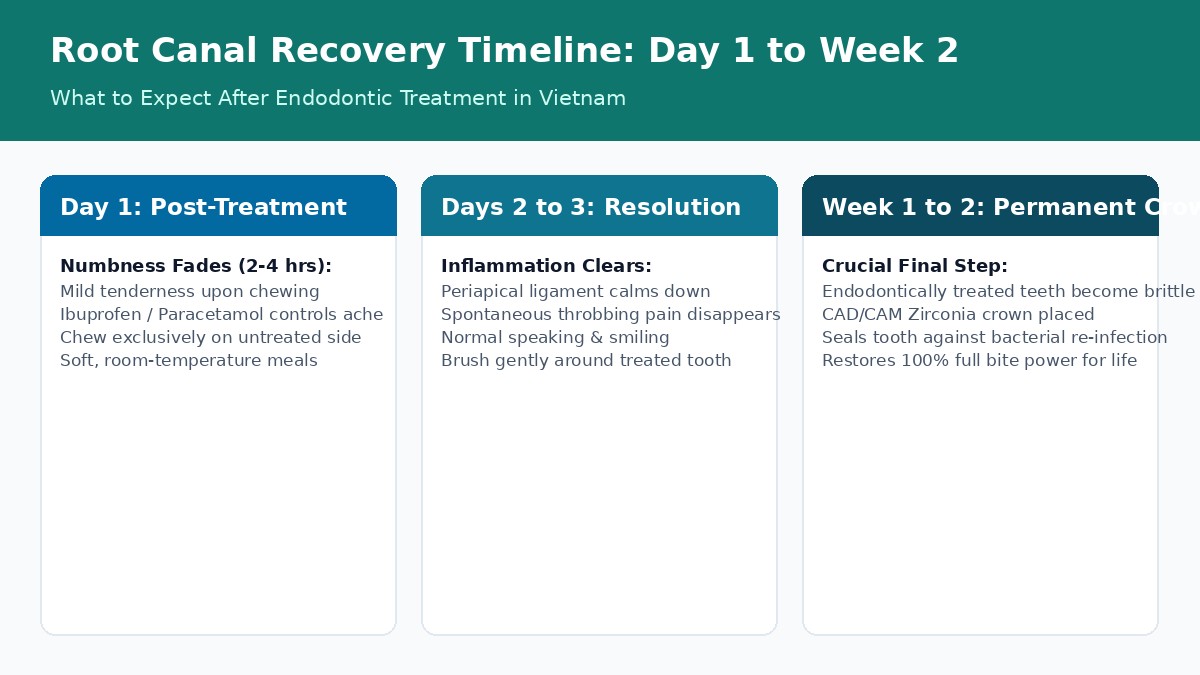
ENDODONTIC HEALING CHRONOLOGY
| HOURS 0 – 4 | Numbness Phase: Lip, cheek & tongue numb. Avoid chewing. Take first dose of ibuprofen BEFORE anesthetic fades fully. |
|---|---|
| DAYS 1 – 2 | Periapical Tenderness: The tooth feels slightly "bruised" or tall when tapping it. Ligament inflammation subsides. Chew strictly on opposite side; soft room-temperature meals. |
| DAYS 3 – 5 | Inflammatory Resolution: Soreness drops by 80-90%. In-house CAD/CAM lab finishes milling your monolithic crown. Permanent crown checked for margin fit, contacts & occlusion. |
| WEEK 2+ | Complete Structural Restoration: Crown bonded permanently. Periodontal ligament completely healed. 100% natural chewing! |
Why Does the Tooth Feel Sore When the Nerve Is Gone?
Patients often wonder: If the dentist removed the nerve inside my tooth, why do I still feel soreness when I tap it?
The answer lies in the Periodontal Ligament (PDL). While the nerve inside the tooth is gone, the tooth root is held in the jawbone by a hammock of living collagen fibers, blood vessels, and pressure receptors. When an infected tooth is instrumented and cleaned, the bone and ligament surrounding the bottom root tip experience temporary localized inflammation. It takes 48 to 72 hours for these external tissues to calm down.
2. Managing Discomfort & Vacation Living in Da Nang
Recovering from endodontic therapy while on holiday in Vietnam is remarkably smooth with sensible precautions:
Evidence-Based Pain Management
- The Synergistic Protocol: Unless contraindicated by your medical history, taking 400mg Ibuprofen combined with 500mg Paracetamol provides superior peripheral and central pain relief compared to opioid analgesics, with zero grogginess or nausea.
- Timing: Take your first pain reliever immediately upon leaving the clinic, so the medication reaches therapeutic blood levels before the local numbness wears off completely.
Vacation Dining Tips: What to Eat in Vietnam
- Breakfast: Warm Vietnamese rice porridge (cháo gà or cháo cá), soft steamed egg buns, or chilled dragonfruit yogurt bowls.
- Lunch & Dinner: Soft steamed sea bass with ginger, tender silken tofu with tomato sauce, delicate mashed pumpkin, and coconut water.
- Foods to Avoid: Crunchy baguettes (bánh mì crusts), tough beef skewers, peanut candies, ice cubes, and extremely piping hot broths.
To review root canal procedure details and pricing, read: Root Canal Treatment Cost in Vietnam vs Australia/US/UK.

<!-- IMAGE SUGGESTION 2 (mid-article): Mid-article: aftercare kit with medication and instructions -->
3. The Crucial Final Step: Crown Placement & Sealing
A root canal is only 50% of the tooth's salvation; the coronal seal represents the other 50%.
WHY A ROOT CANAL TOOTH NEEDS A CROWN
(Result: Catastrophic fracture requiring extraction) (Result: Guaranteed tooth survival for decades!)
| Unprotected Root Canal Tooth | Zirconia-Crowned Tooth |
|---|---|
| Brittle, dehydrated enamel<br>Micro-cracks spread downward<br>Heavy molar bite force splits<br>tooth vertically in half! | 360-degree Zirconia<br>"Ferrule" effect shields<br>tooth from biting stress |
Why Same-Week Crown Placement Matters
In Western countries, patients often wait weeks or months with a chalky temporary filling between appointments. During this gap, saliva and bacteria can leak past the temporary seal, re-infecting the root canals.
In Vietnam, top clinics in Da Nang utilize digital intraoral scanning and automated in-house CAD/CAM milling units to fabricate your permanent Monolithic Multilayer Zirconia Crown in just 24 to 48 hours. This immediate hermetic seal protects your financial and biological investment before you board your flight home.
To understand how crowns and implants interact across full mouth restorations, see: Single vs Multiple vs All-on-4 Implants: Which Do You Need?.
4. Normal Symptoms vs Warning Signs: When to Contact Your Clinic
While complications occur in less than 2% of modern endodontic procedures, knowing how to distinguish normal healing from warning signs ensures complete safety:
Leading dental centers in Vietnam provide direct WhatsApp access to their English-fluent international patient coordinator, ensuring 24/7 medical guidance throughout your stay.
| Normal Expected Symptoms | Warning Signs (Contact Clinic Immediately) |
|---|---|
| • Mild dull ache when chewing • Slight tenderness around gumline • Gum feels slightly bruised • Symptoms steadily decrease daily • Easily managed with ibuprofen | • Severe, escalating, unmanageable pain • Visible swelling of the cheek, jaw, or floor of the mouth • Persistent bad taste / pus discharge • High fever, chills, or difficulty opening your jaw |
To verify emergency clinic protocols, read: Emergency Dental Treatment in Vietnam for Tourists and check hospital ratings on Da Nang Dental Hub.
Practical tip: Take a photo of your smile on day one of recovery and then weekly. Healing is gradual enough that you will not notice progress day to day — the photos prove it is happening.
<!-- IMAGE SUGGESTION 3 (before FAQ): Before FAQ: patient relaxing on shaded beach lounger during recovery -->
Frequently Asked Questions (FAQ)
How long does soreness last after a root canal in Vietnam?
Mild to moderate tenderness when biting down is completely normal for 48 to 72 hours following treatment. This soreness originates in the inflamed periodontal ligament surrounding the root tip (periapical tissue) as it cleanses residual inflammation. Standard over-the-counter anti-inflammatories like ibuprofen (400–600mg) or paracetamol keep discomfort well controlled.
What is the difference between normal post-op soreness and a root canal failure?
Normal post-op soreness gradually diminishes each day, responds well to mild painkillers, and is only felt when chewing directly on the tooth. Warning signs of complication include: severe, spontaneous throbbing pain that worsens over time, visible swelling of the cheek or jaw, a bad taste in the mouth, or a spike in body temperature. If these occur, your clinic will see you immediately for evaluation.
Can I eat normally immediately after a root canal?
While your mouth is numb (typically 2 to 4 hours post-procedure), avoid eating solid foods to prevent accidentally biting your tongue or inner cheek. For the first 48 hours, chew exclusively on the opposite side of your mouth and eat room-temperature, soft foods. Avoid sticky, hard, or crunchy foods until your permanent custom crown has been securely bonded.
Why is a permanent crown required so soon after endodontic treatment?
When a tooth undergoes a root canal, the internal living pulp, nerves, and blood supply are removed. This deprives the tooth of internal hydration, leaving the remaining hollowed enamel walls brittle and prone to catastrophic vertical fracture under heavy chewing forces. A CAD/CAM monolithic zirconia crown placed within 48 to 72 hours encases the tooth, restoring 100% of its biting power.
What does aftercare look like once I am back home?
You will leave with written aftercare instructions, prescribed medication, and your full treatment records. Mild swelling for 2–3 days is normal after surgery. Your clinic stays reachable by message or video call, and your local dentist can handle routine check-ups.
What qualifications should I look for in a Vietnamese dentist?
Look for dentists with postgraduate training or fellowships abroad, memberships in bodies like ICOI or ITI for implantology, and several years of experience with international patients. A good clinic will share dentist profiles openly when you ask.
Restore Your Tooth in Complete Comfort in Vietnam
Experience gentle, pain-free endodontics backed by advanced 3D diagnostics, in-house ceramic crowns, and compassionate international aftercare in Da Nang.
---
This article is for informational purposes only and is not medical advice. Please consult a qualified dentist for diagnosis and treatment options.
How long does soreness last after a root canal in Vietnam?
Mild to moderate tenderness when biting down is completely normal for 48 to 72 hours following treatment. This soreness originates in the inflamed periodontal ligament surrounding the root tip (periapical tissue) as it cleanses residual inflammation. Standard over-the-counter anti-inflammatories like ibuprofen (400–600mg) or paracetamol keep discomfort well controlled.
What is the difference between normal post-op soreness and a root canal failure?
Normal post-op soreness gradually diminishes each day, responds well to mild painkillers, and is only felt when chewing directly on the tooth. Warning signs of complication include: severe, spontaneous throbbing pain that worsens over time, visible swelling of the cheek or jaw, a bad taste in the mouth, or a spike in body temperature. If these occur, your clinic will see you immediately for evaluation.
Can I eat normally immediately after a root canal?
While your mouth is numb (typically 2 to 4 hours post-procedure), avoid eating solid foods to prevent accidentally biting your tongue or inner cheek. For the first 48 hours, chew exclusively on the opposite side of your mouth and eat room-temperature, soft foods. Avoid sticky, hard, or crunchy foods until your permanent custom crown has been securely bonded.
Why is a permanent crown required so soon after endodontic treatment?
When a tooth undergoes a root canal, the internal living pulp, nerves, and blood supply are removed. This deprives the tooth of internal hydration, leaving the remaining hollowed enamel walls brittle and prone to catastrophic vertical fracture under heavy chewing forces. A CAD/CAM monolithic zirconia crown placed within 48 to 72 hours encases the tooth, restoring 100% of its biting power.
What does aftercare look like once I am back home?
You will leave with written aftercare instructions, prescribed medication, and your full treatment records. Mild swelling for 2–3 days is normal after surgery. Your clinic stays reachable by message or video call, and your local dentist can handle routine check-ups.
What qualifications should I look for in a Vietnamese dentist?
Look for dentists with postgraduate training or fellowships abroad, memberships in bodies like ICOI or ITI for implantology, and several years of experience with international patients. A good clinic will share dentist profiles openly when you ask.
Dental Tourism Vietnam Cost: Complete Price Guide & Financial Planning 2026
Save 70-80% on dental care in Vietnam. Complete 2025 cost guide, procedure comparison vs Australia/US/UK, payment methods, hidden fees & net ROI calculator.
Complete Cost Breakdown: Flight + Hotel + Treatment in Vietnam
Full out-of-pocket cost breakdown for dental tourism in Vietnam. Return flights, 4-star hotels, dental procedures, meals, and real patient budget models.
Dental Tourism Cost Calculator: How to Estimate Your Trip
Calculate your dental tourism savings in Vietnam. 4-step formula: clinic procedures + flights + resort stays + living expenses vs Western costs.
Independent Pre-Trip Resources for International Patients
To ensure your dental travel journey is seamless and well-prepared, we recommend consulting these independent destination and recovery travel guides:
"Check international dental travel insurance rules on VietnamMedicalTravelGuide"
• Post-op soft food dining & culinary recovery in Vietnam
"Explore the Da Nang expat enclave & coastal guide on DaNangDentalHub"
• Top 5-star beachfront resorts with clinic concierge shuttles